Fly Line
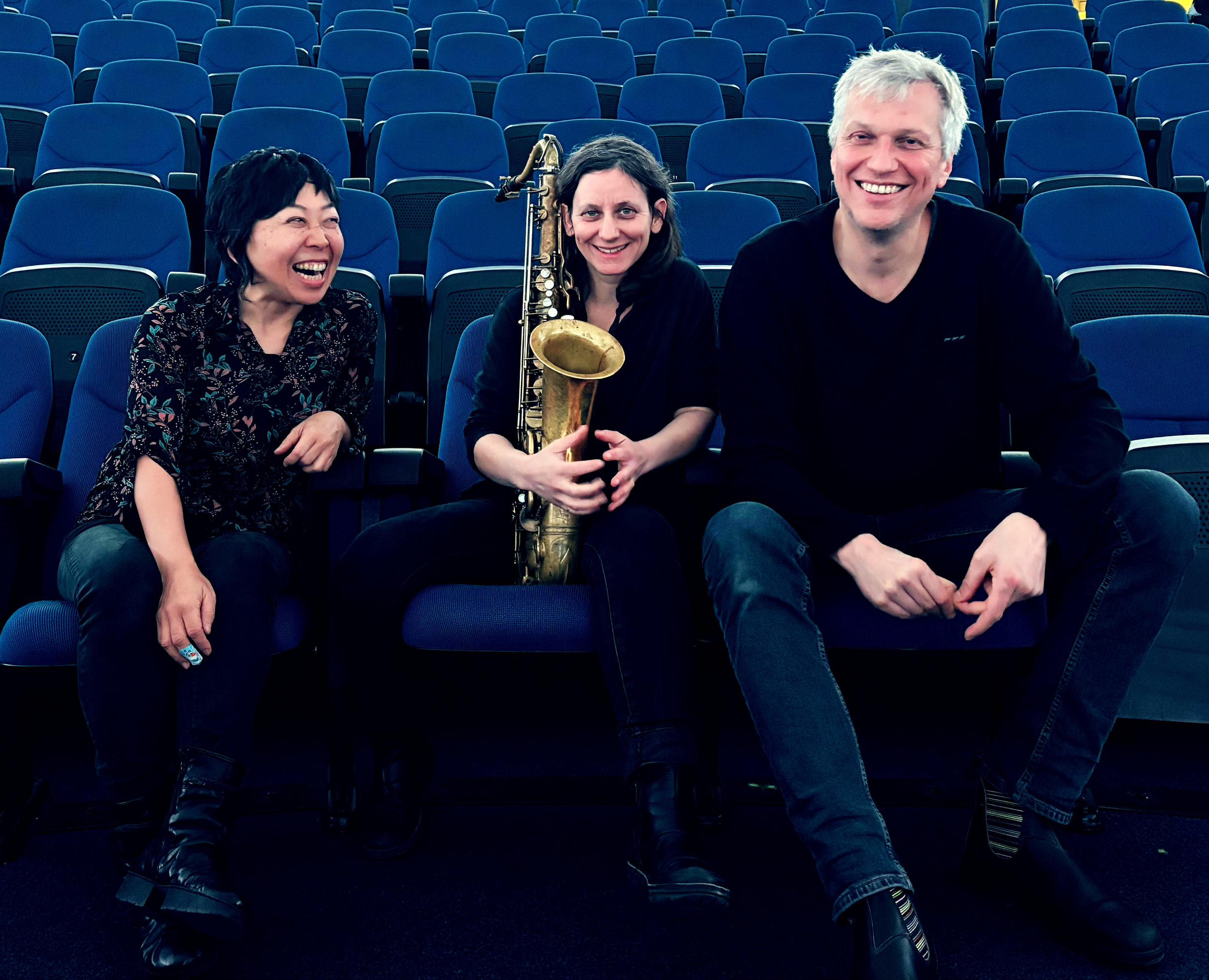


Fly Line is a trio led by French saxophonist, vocalist, and composer Alexandra Grimal, bringing together Japanese drummer, percussionist, and vocalist Yuko Oshima and Grimal’s longtime musical ally, Belgian pianist, keyboardist, and electronic musician Jozef Dumoulin. Through Grimal’s compositions, their music navigates within a dream-like sonic sphere between jazz, electroacoustic composition, and sound poetry.
Together they drift through a space between ambiguity and definition. Quiet in its outward gesture yet carrying a constantly reconfigured inner intensity, the music unfolds with remarkable patience, with every timbre, silence, and inflection carrying equal significance. Highly intimate yet radically open, each performance is sustained by a form of collective attentiveness that remains both exact and elusive.
Grimal’s compositions establish a shared terrain in which parallel musical trajectories emerge, intersect, and gradually reshape one another. Fine detail and nuanced articulation hold these trajectories together, allowing the music to remain open without relinquishing its inner coherence.
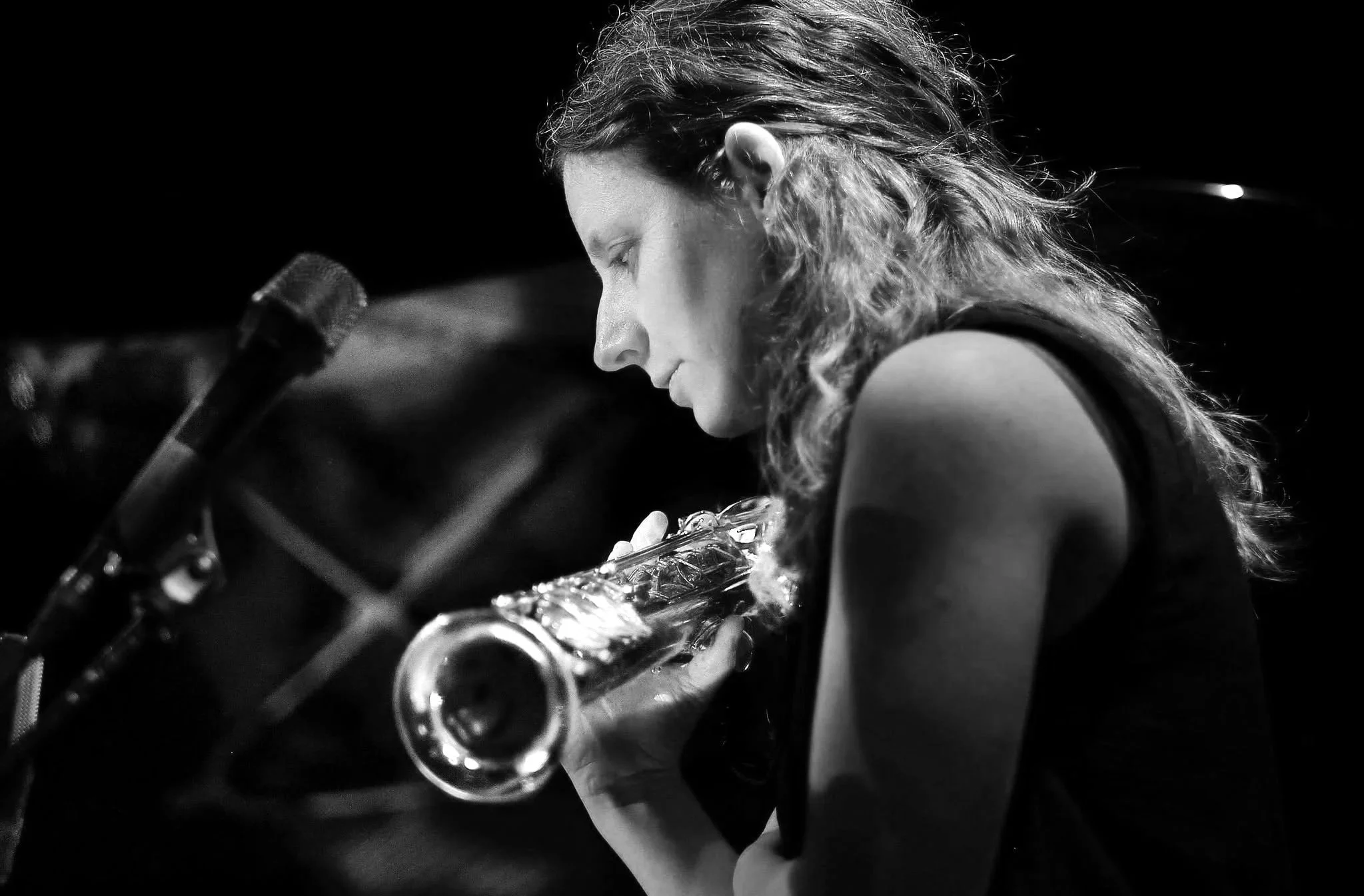
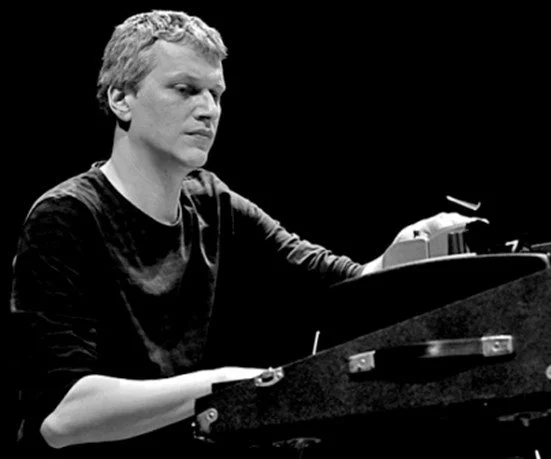
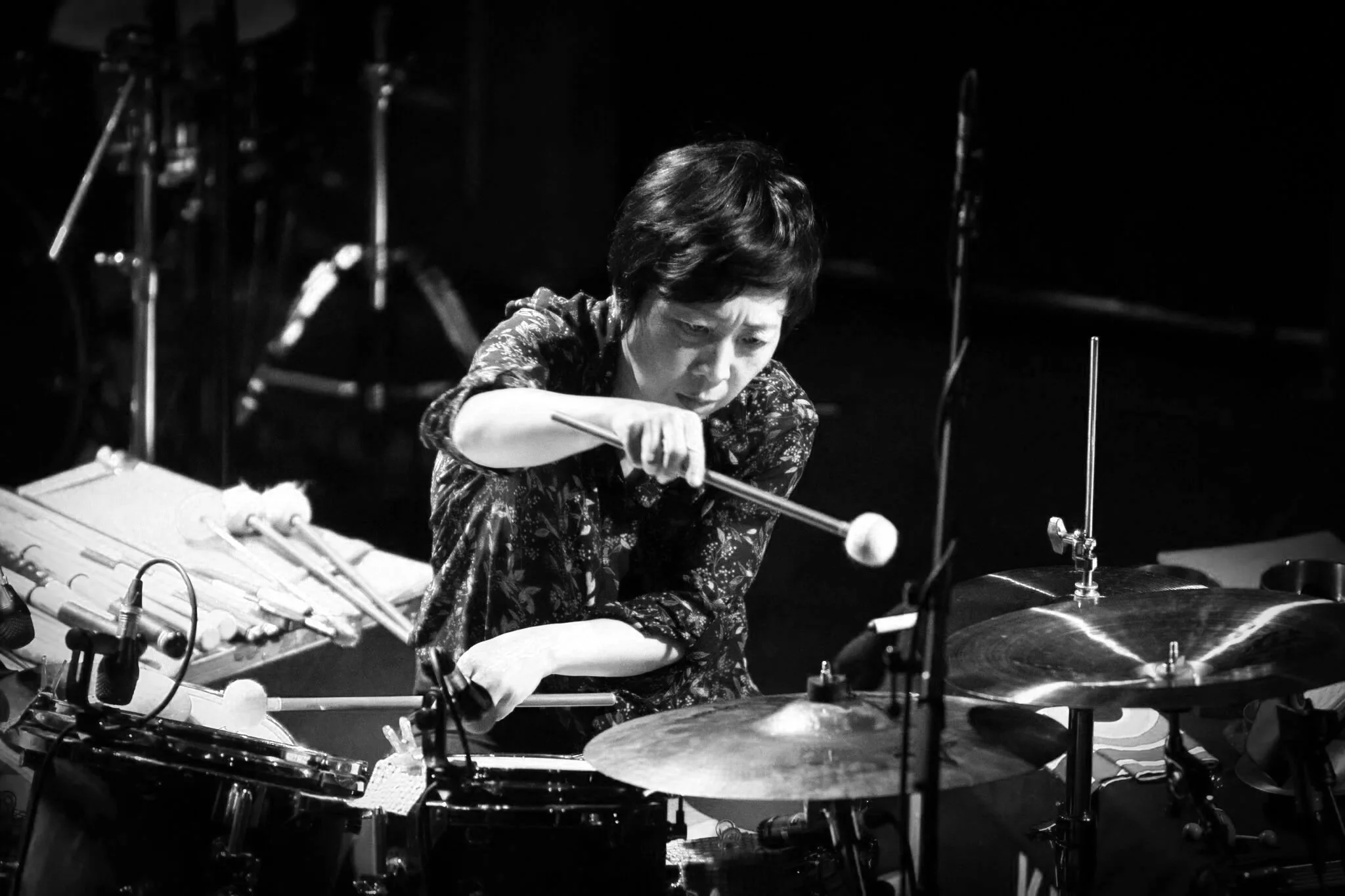
Dumoulin moves between piano and electronics as a fluid sonic process, where resonance and spatial perception open into an immersive continuum that constantly reconfigures listening itself. Oshima approaches percussion and drums as a tactile, textural space, shaping sound through pressure, touch, and placement in a way that feels quietly poetic and materially present. Grimal moves between tenor and soprano saxophones, where breath and vocal fragments enter the space opened by her writing, extending compositional thought into forms that remain both precisely articulated and lightly suspended.
Fly Line charts a meditative voyage guided by precision, restraint, and imagination. Each gesture remains distinct yet continuously reconfigured through collective listening, forming a living structure that resists closure while remaining coherently sustained.
Shifting between hovering suspended stillness and delicate yet dense abstract movements, Grimal and her companions invite listeners on a journey through constellations in motion. Fly Line further affirms Alexandra Grimal as one of the most inventive and uncompromising voices in European contemporary jazz.
Artists
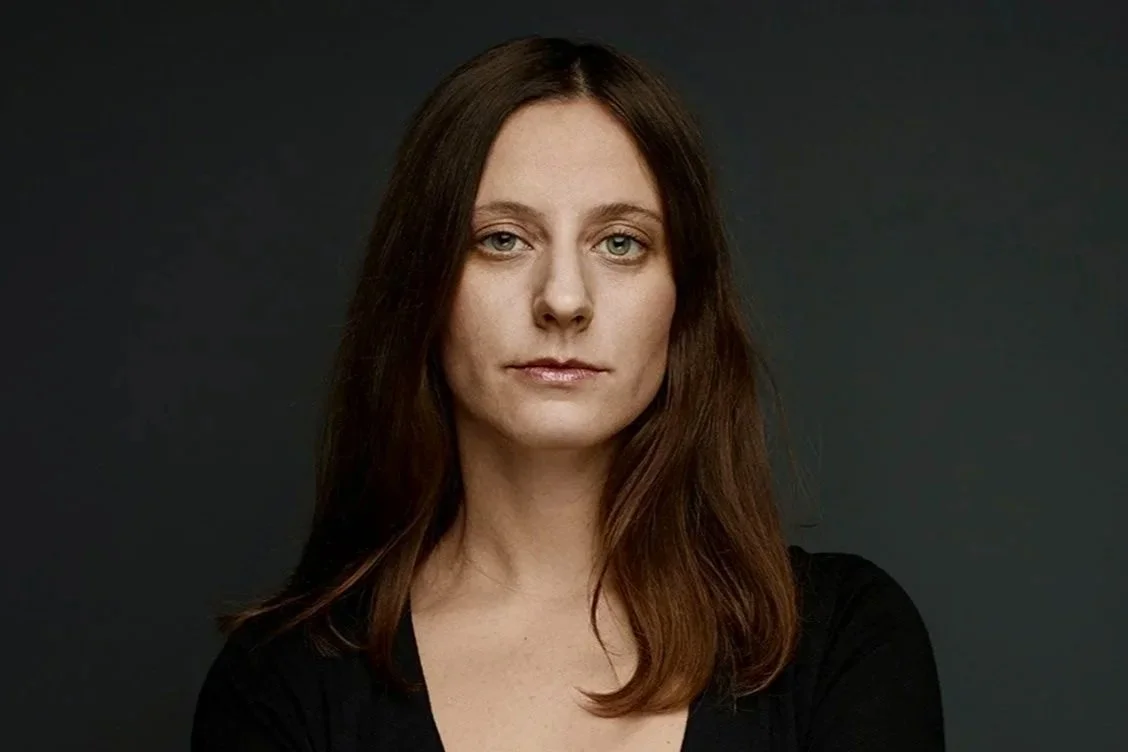
Alexandra Grimal - tenor & soprano saxophones, voice, compositions
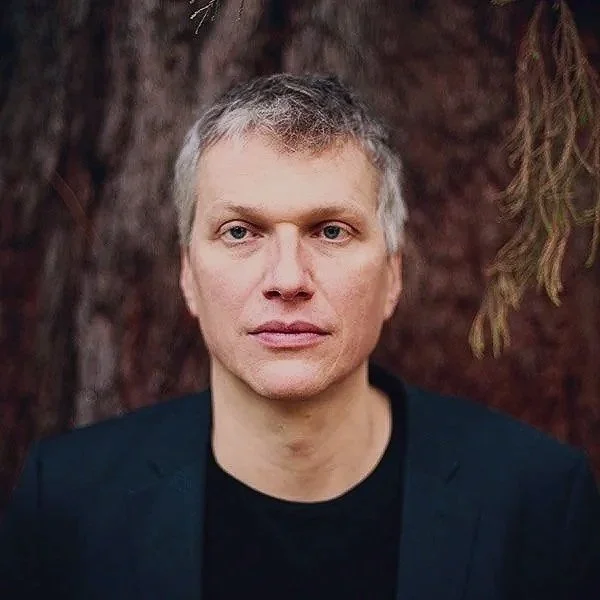
Jozef Dumoulin - piano, electronics
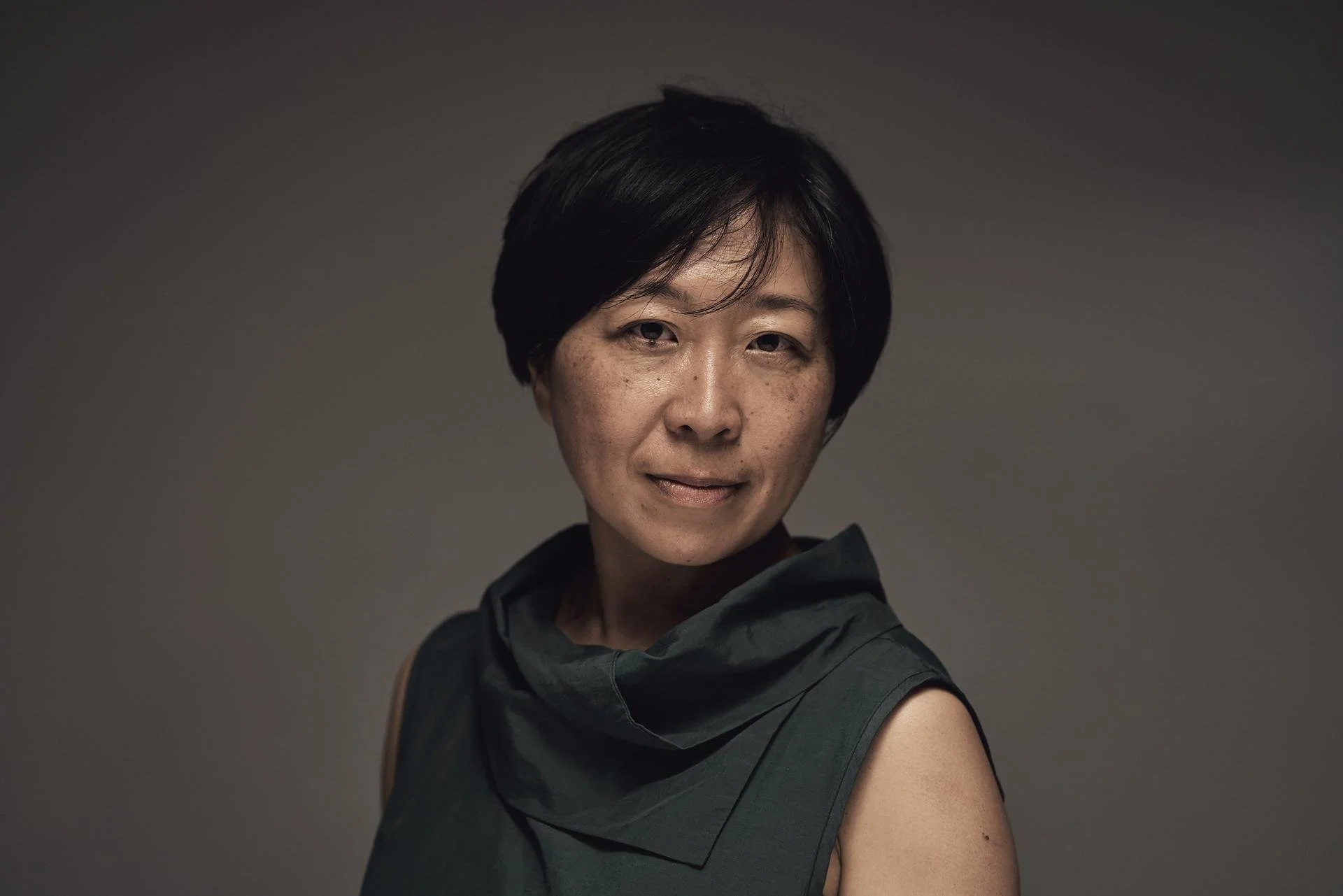
Yuko Oshima - drums, percussions, voice
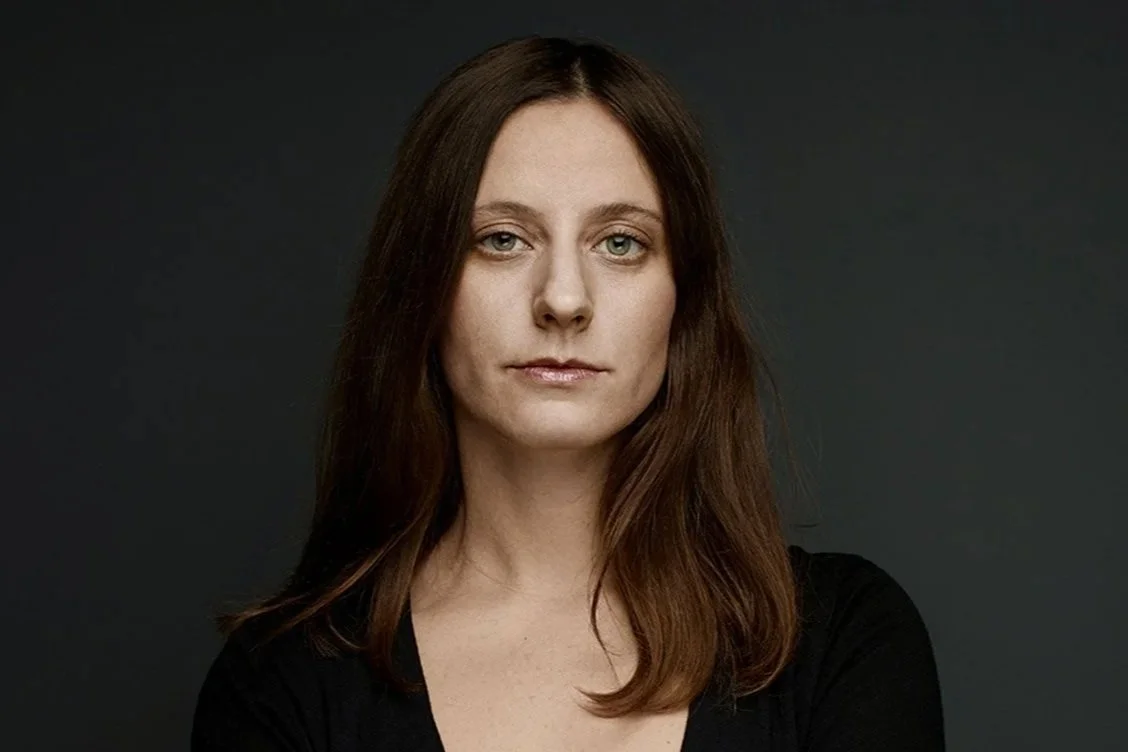
Alexandra Grimal is a saxophonist and composer.
She has recorded 16 albums as a leader and more than forty as a sidewoman. She is regularly invited to international residencies and receives composition commissions.
She trained in jazz saxophone at the Sibelius Academy, the Conservatoire National Supérieur de Musique de Paris, and the Royal Conservatory of The Hague, studying with John Ruocco. She also studied singing with Donatienne Michel-Dansac, Martina Catella, Parvathy Baul, and Wasifuddin Dagar.
She was noted in 2007 at the Concours International de Jeunes Solistes de Fribourg and has since received several soloist awards, as well as two MacDowell Fellowships and a Tavitian Fellowship as a composer.
She released her first album, Shape, in 2009 with Antonin Rayon and Emmanuel Scarpa. After her second album Seminare Vento, she moved to New York for two years. She later released Owls Talk, featuring Lee Konitz, Gary Peacock, and Paul Motian. She also led the ensemble Nāga, a state-commissioned project including musicians such as Marc Ducret, Nelson Veras, Benoît Delbecq, Stéphane Galland, Jozef Dumoulin, and Lynn Cassiers.
Her album Andromeda, with her American quartet, features Todd Neufeld, Thomas Morgan, and Tyshawn Sorey.
She has performed internationally at festivals and venues such as Musica, Donaueschingen, Philharmonie de Paris, Krakow Philharmonic, Parco della Musica, Dijon Opera, and in Japan. She has also been a soloist with the Orchestre National de Jazz and in Joëlle Léandre’s tentet Can You Hear Me?.
She performs as a singer with the Dedalus Ensemble, including in Death Speaks by David Lang.
As a composer, she has written works for ensemble, voice, and orchestra. Her orchestral piece Humus was commissioned by the Philharmonie de Paris and the Paris Mozart Orchestra (PMO) and premiered at the Philharmonie de Paris. Her melologue Le jardin en mouvement, for narrator and ensemble with Suliane Brahim, was commissioned by PMO and based on a text by Gilles Clément. It was performed in symphonic version at the Château de Chambord festival, where she was composer-in-residence.
Her solo saxophone work Refuge was released in 2022 on Relative Pitch Records. In 2024, L’enfant invisible, a solo voice piece for Donatienne Michel-Dansac, was premiered at the Salzburg Mozarteum.
She was a professor of composition at the Bern University of the Arts in Switzerland from 2021 to 2023. She currently leads the trio Fly Line with Yuko Oshima and Jozef Dumoulin, and a duo with pianist Sophia Domancich (dans l’arbre). She also leads the collective REWILD with Fred Frith, Marc Ducret, Susana Santos Silva, and Gerry Hemingway.
She received the “100 Femmes de Culture 2023” Award in France.
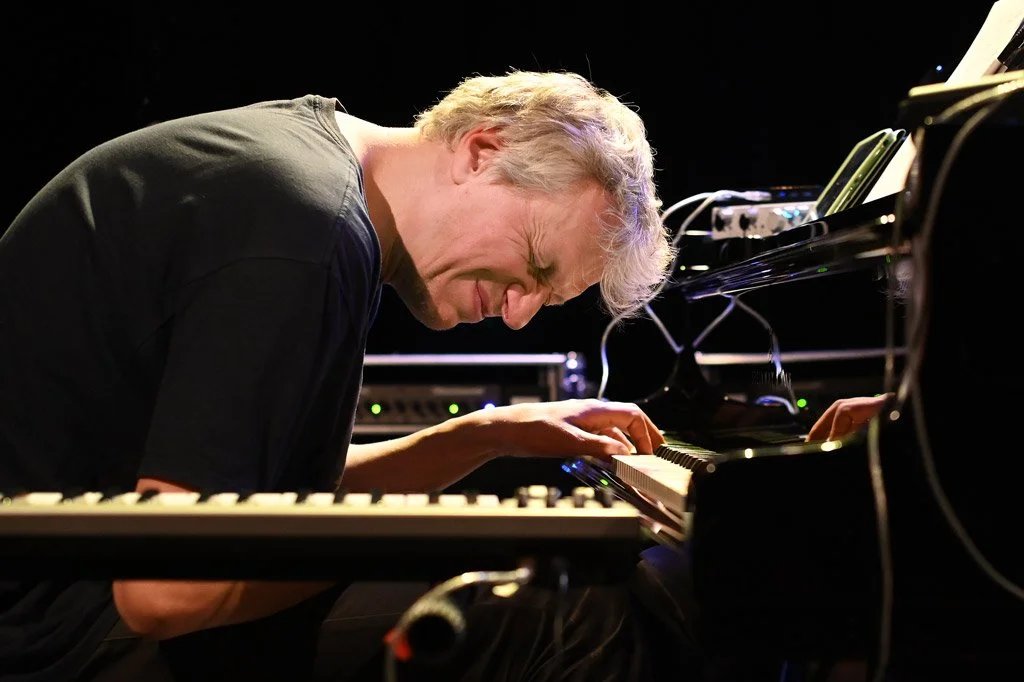
Paris-based Belgian pianist, composer and electronic musician Jozef Dumoulin is widely recognized for his role in redefining the Fender Rhodes as a 21st-century instrument and for forging a highly personal musical language through extensive electronic manipulation.
In 2026, his most recent collaborative release is Iterae, an acutely focused musical dialogue of two visionary artists from opposite sides of the Atlantic, known for their transformations of the Fender Rhodes electric piano together with Joseph Branciforte.
On his most recent solo album, This Body, This Life (2023, Carton Records), He extended his sonic language across piano, synthesizers, guitar, voice, programming and field recordings.
A landmark in his discography is A Fender Rhodes Solo (2014), a fully dedicated solo album for Fender Rhodes that defined an important part of his individual instrumental language.
Dumoulin studied piano, organ, clavichord, euphonium, harmony and drums from an early age. He later studied psychology before entering the Brussels Conservatory with Diederik Wissels and Nathalie Loriers, and continued his studies at the Musikhochschule of Cologne with John Taylor. Dumoulin has developed a wide-ranging artistic output across multiple ensembles and collaborations.
His projects include The Red Hill Orchestra (with Ellery Eskelin and Dan Weiss), Lilly Joel (with Lynn Cassiers), Plug And Pray (with Benoît Delbecq), Too Tall To Sing (with Flin van Hemmen), Orca Noise Unit (with Sylvaine Hélary, Antonin Tri Hoang, Bruno Chevillon, Toma Gouband), Bará (with Baba Sissoko and Afra Mussawisade) and Speaking Kindly (with Bo Van Der Werf).
His broader collaborations include work with Mark Turner, Craig Taborn, Jim Black, Arve Henriksen, Stian Westerhus, Nate Wooley, Marc Ducret, Keiji Haino, Trevor Dunn, Reggie Washington, Bill Carothers, Michael Brecker, Dave Liebman, Ron Miles, Nelson Veras, Corry Smythe and Daniel Humair, among many others.
He has also worked with large ensembles including Magic Malik Orchestra, Brussels Jazz Orchestra, Aka Moon and Octurn.
Dumoulin has performed internationally and appears on more than 100 recordings.
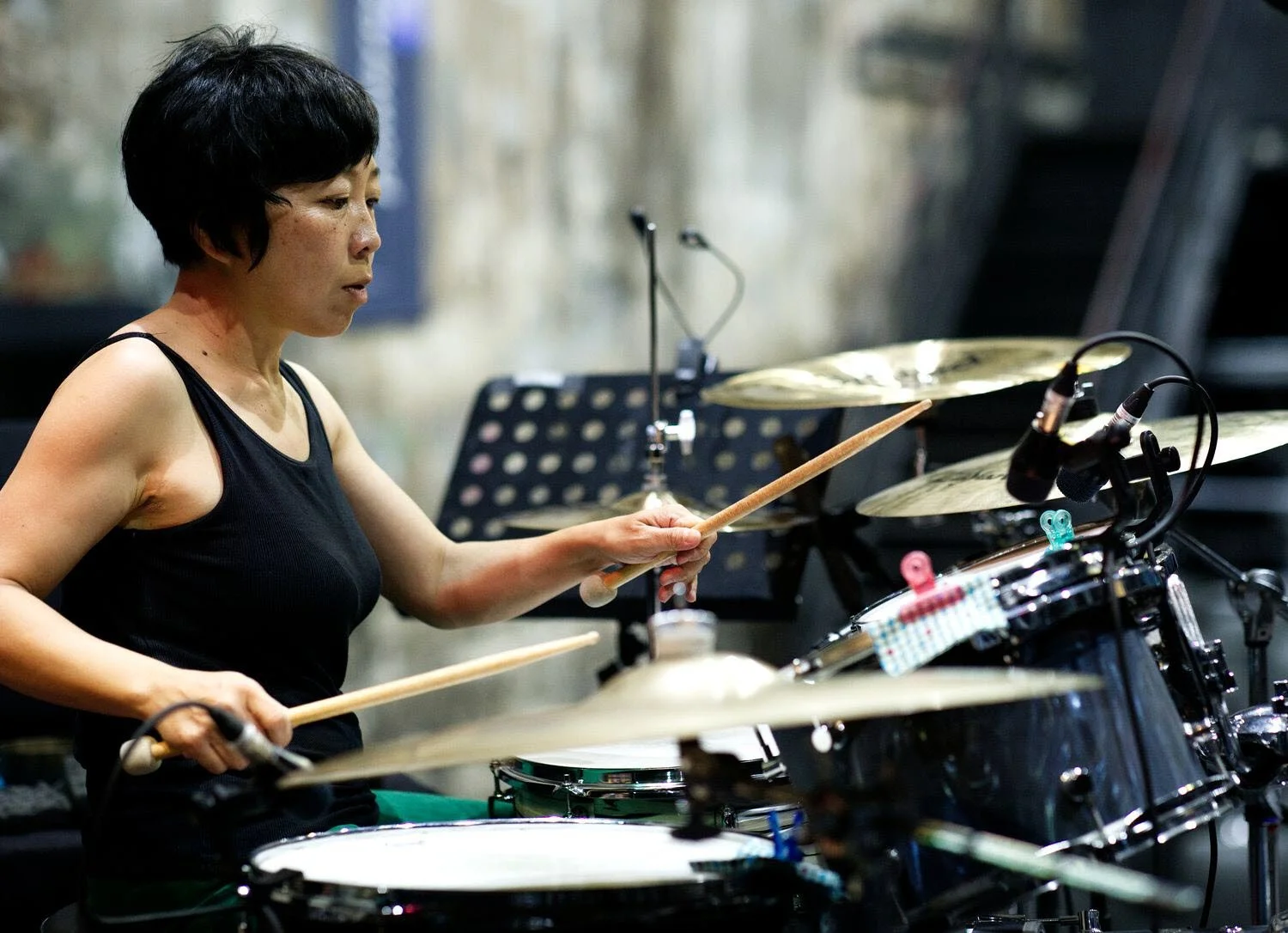
Japanese drummer, improviser and composer based in France since 2000, Yuko Oshima has developed a highly personal musical universe where jazz, contemporary music, improvisation and experimental creation intersect, strongly marked by the imprint of her native culture. Initially self-taught in Japan, she later trained at the Strasbourg Conservatory and the Percussion School of Strasbourg, where she refined her technique and deepened her relationship with the instrument. She has since shaped an organic and poetic drumming style in which precision, energy and freedom come together in a profound exploration of sound.
Guided by creativity and artistic encounters, she has initiated several personal projects. In 2015, she founded Bishinkodo, a duo with Éric Broitmann (Motus) combining drums and acousmonium, exploring the interplay between acoustic and electronic sound. In 2018, she created Hiyomeki, an improvisation trio with Samuel Colard (piano) and Vincent Robert (modular synthesizer), focusing on instant composition and collective sound construction. In 2024, she launched Ukiyoto, a trio project born from her residency at Villa Kujoyama in Kyoto in 2022. This residency strengthened her artistic approach: connecting her cultural heritage with her work as a composer and improviser, and building bridges between ancient rituals and contemporary practices. Within this ensemble, she explores Nagauta, a traditional music form she studied during the residency and reimagines it through a distinctly contemporary compositional language. For this project, she brings together Kazuhisa Uchihashi, a Japanese jazz and experimental guitarist and master of the daxophone, and Olivier Lété, a bassist whose sonic research on electric bass helps shape a singular sound world, while Oshima herself contributes the poetry and depth of her voice rooted in Japanese musical traditions.
Active on the European scene, Yuko Oshima performs in numerous ensembles: a drum duo with Hamid Drake; the trio Hikaeme with Rieko Okuda (piano, voice) and Taiko Saito (marimba, vibraphone, voice); the trio Rouge with Isabelle Duthoit (clarinet, voice) and Soizic Lebrat (cello); and the trio Lauroshilau with Pak Yan Lau (piano and electronics) and Audrey Lauro (alto saxophone). She also develops solo performances combining drums, voice and Japanese singing bowls. In Japan, she has performed with the trio Gakusei Jikken Shitsu since 1998. Until 2015, she was part of the duo Donkey Monkey with pianist Eve Risser.
She has been seen in many jazz festivals such as Berlin, Moers, Tokyo, Tampere, Saalfelden, Paris, Moldo, London, Vancouver, Ottawa, etc., and also in other various artistic places like the Museum of Contemporary Art, Chicago, Centre Pompidou, and Festival d’Avignon. Her precise and intense stage presence has made her a distinctive figure in contemporary jazz, improvised music and experimental sound practices, as well as within the worlds of dance and theatre.
Photo credits:
Fly Line - © unknown
Alexandra Grimal - © Pierre-Henri Chauveau
Jozef Dumoulin - © Jean-Baptiste Millot - b&w © Guy Van de Poel
Yuko Oshima - © Franck Farré - b&w © Steffi Marcus